
Guest article by Iona Isachsen, Smart Surfaces Coalition
The Smart Surfaces Coalition (SSC) is committed to accelerating the adoption of cost-effective resilient infrastructure strategies, or Smart Surfaces, that help cities mitigate extreme heat and manage stormwater. While Smart Surfaces like cool roofs, cool exterior walls, permeable paving, and nature-based solutions are well established and widely used, cool pavement technologies are newer and less standardized. Municipalities are eagerly exploring the potential for cool pavement to help mitigate extreme heat and extend road lifespan, but they’re seeking clarity on product comparisons, long-term durability, and best practices across different roadway applications.
To support cities’ exploration of cool pavement solutions, SSC convenes the Cool Roadways Partnership (CRP): a national peer-learning network of researchers, nonprofits, and over 60 cities and counties working to advance cool pavement as an urban heat mitigation strategy. The CRP offers a forum to compare technology options, share implementation challenges, and discuss strategies to encourage the development and deployment of high-performing products.
“Cool pavement” is an umbrella term describing a range of technologies designed to reduce pavement temperatures, mitigate urban heat, and maintain pavement. SSC’s recently published Cool Pavement Primer outlines the diverse product types—including cost variability, use cases, and material characteristics—to help public officials make informed decisions. The Primer highlights key benefits, summarizes municipal project outcomes, and offers implementation guidance for jurisdictions considering pilots or program expansion.
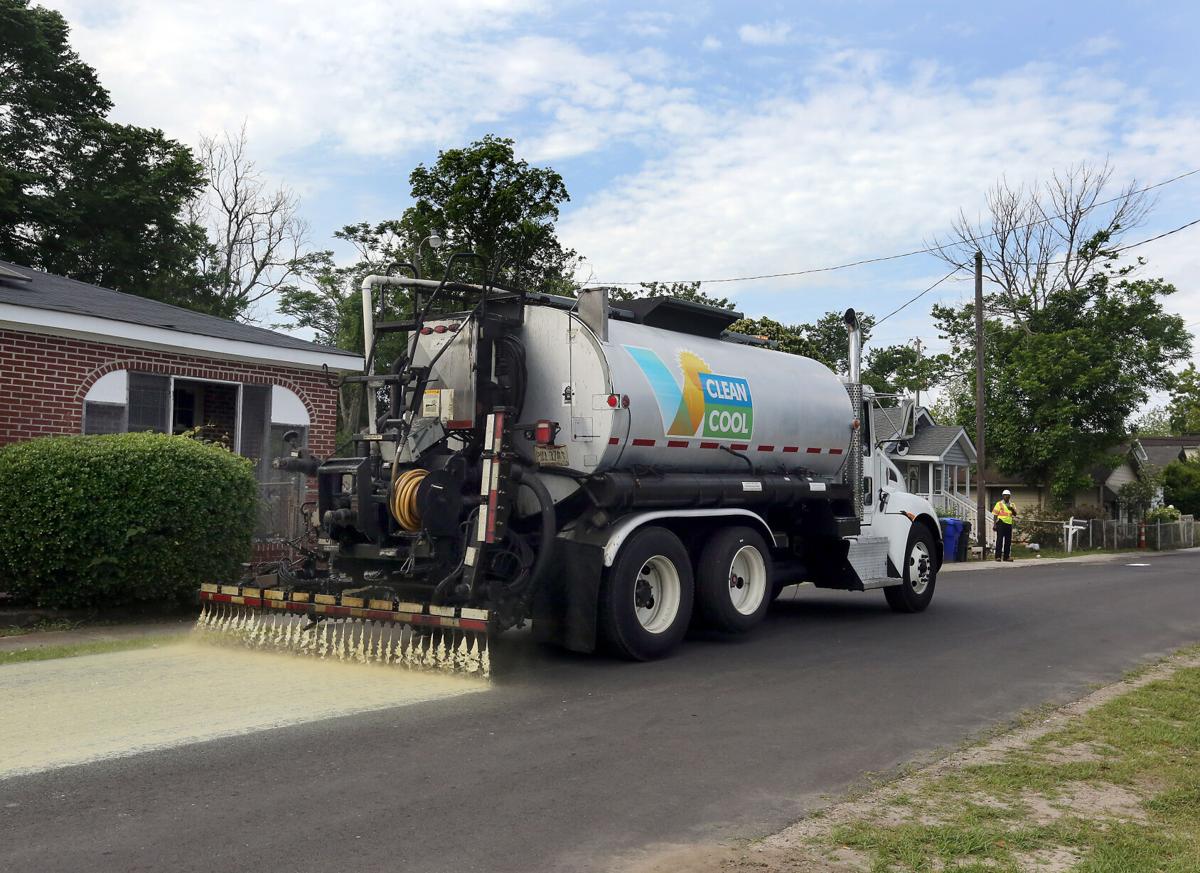
Across the country, jurisdictions are adopting an array of cool pavement technologies. Charleston County Public Works piloted a photocatalytic asphalt rejuvenator in 2021 as an alternative maintenance treatment that also provides environmental benefits. The treatment uses titanium dioxide nanoparticles that react with sunlight to break down pollutants. Through a research partnership with Texas A&M Transportation Institute, evaluation testing confirmed notable reductions in nitrogen oxides and microplastics pollutants. The County has since expanded the treatment’s use, surpassing annual deployment goals.
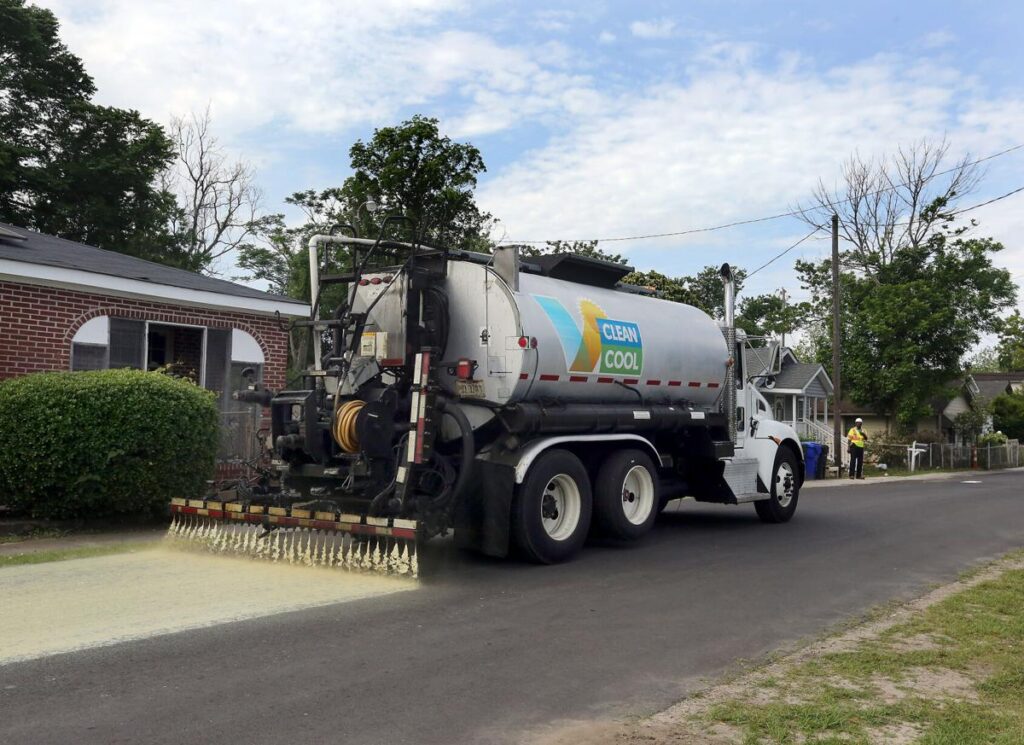
Image credit: Charleston County Government
Meanwhile, the City of Phoenix has applied cool pavement to 140 miles of existing roads, primarily using a reflective epoxy-fortified acrylic seal and a reflective asphalt emulsion sealcoat on residential streets. Since piloting cool pavement in 2020, Phoenix has encouraged manufacturers to optimize formulations to suit local conditions and preferences. Phoenix and other municipalities are now calling for the development of reflective paving solutions for new road construction.
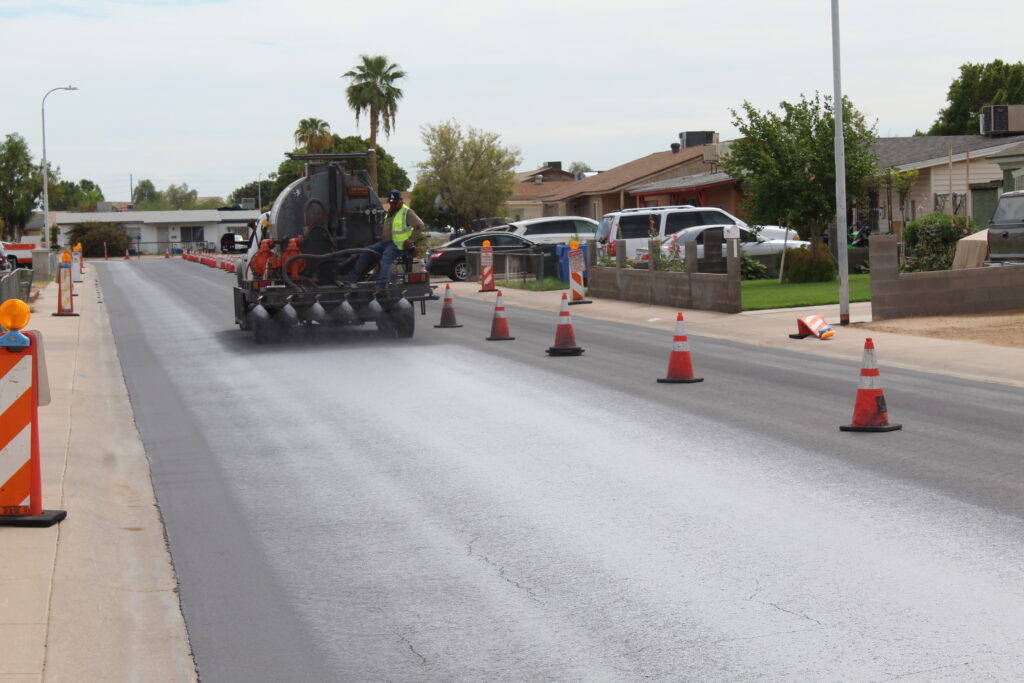
Image Credit: Smart Surfaces Coalition
Researchers at MIT’s Concrete Sustainability Hub make a compelling case for concrete to serve this role. Concrete’s relatively high initial solar reflectance (typically between 0.30-0.45, compared to new asphalt’s ~0.05) provides atmospheric cooling, and the rigidity of concrete roads reduces vehicle fuel consumption. However, these benefits do not fully offset concrete’s high embodied carbon, whereas reflective asphalt pavement coatings can result in net CO2e savings (Mack & Scofield, 2025). The challenge remains in developing asphalt solutions that maintain high solar reflectance throughout a road’s service life—and in scaling low-carbon concrete options.
Widespread adoption of cool pavement also hinges on the availability of independent, standardized product ratings. Most performance insights come from municipal-academic research partnerships that vary in scope and methodology, and the wide variety of product types complicates the development of a single rating system. For example, solar reflectance measurements may undercount the cooling benefits of photocatalytic pavement treatments, as these materials convert solar energy into chemical rather than thermal energy.
Reliable evaluation metrics are essential for helping cities select cool pavement products suited for each roadway type. As with all resilient infrastructure strategies, material selection should also consider lifecycle costs and benefits, not just lowest first cost. Cool pavements are not a silver bullet for urban heat mitigation, but they are an important component of a broader suite of surface strategies needed to equitably advance urban resilience. SSC remains committed to supporting cities in evaluating technologies, sharing outcomes, and advancing market standards through the Cool Roadways Partnership.
This article was originally published in the January 2026 edition of the CRRC Cool Reflections Newsletter.